
Sản phẩm nổi bật
Cisco
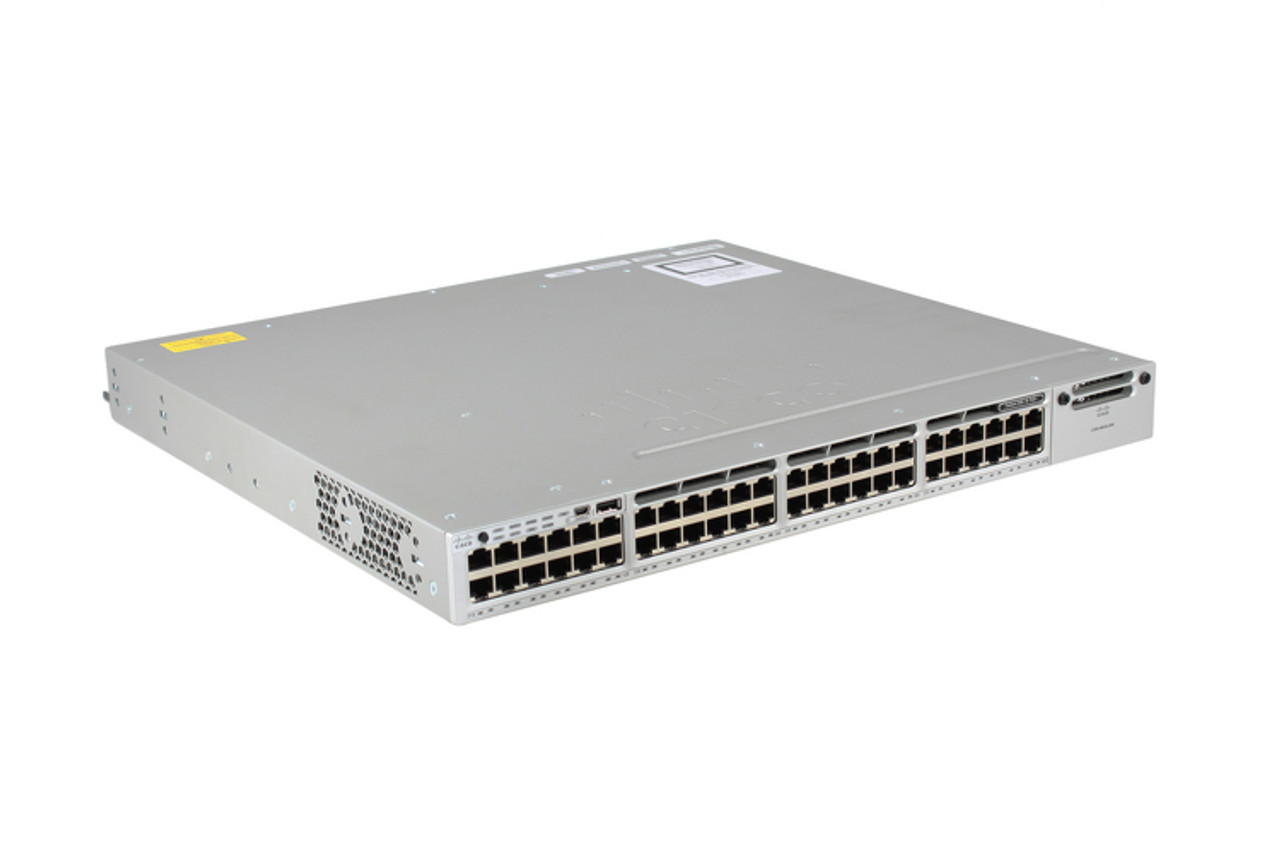
Thiết bị chuyển mạch CISCO WS-C3850-48T-E 48-Port Ethernet Switch w/C3850-NM-4-10G
Liên hệ
Yêu cầu báo giá
 Hàng chính hãng
Switch Cisco C1200-8T-E-2G 10x Gigabit Ethernet: 8x 10/100/1000 ports; 2x Gigabit copper/SFP combo ports
Swiching capacity: 20Gbps ; Forwarding rate: 14.88Mpps
Thiết bị chuyển mạch Switch Cisco C1200-8T-E-2G thuộc dòng Cisco Catalyst 1200 Series những switch giá phải chăng, dễ sử dụng, được thiết kế và xây dựng đặc biệt cho các doanh nghiệp nhỏ và trung bình.
| Datasheet C1200-8T-E-2G | |
| Product specifications | |
| Model | C1200-8T-E-2G |
| Performance | |
| Capacity in millions of packets per second (mpps) (64-byte packets) | 14.88 |
| Switching capacity in gigabits per second (Gbps) | 20 |
| Layer 2 switching | |
| Spanning Tree Protocol (STP) |
Standard 802.1d spanning tree support |
| Port grouping/link aggregation |
Support for IEEE 802.3ad Link Aggregation Control Protocol (LACP) ● Up to 4 groups |
| VLAN |
Support for up to 255 active VLANs simultaneously |
| Voice VLAN | Voice traffic is automatically assigned to a voice-specific VLAN and treated with appropriate levels of QoS. Voice Services Discovery Protocol (VSDP) delivers networkwide zero-touch deployment of voice endpoints and call control devices |
| Internet Group Management Protocol (IGMP) versions 1, 2, and 3 snooping | Limits bandwidth-intensive multicast traffic to only the requesters; supports 255 multicast groups (source-specific multicasting is also supported) |
| IGMP querier | Used to support a Layer 2 multicast domain of snooping switches in the absence of a multicast router |
| Layer 3 routing | |
| IPv4 routing |
Wire-speed routing of IPv4 packets |
| IPv6 routing | Wire-speed routing of IPv6 packets |
| Layer 3 interface | Configuration of Layer 3 interface on physical port, LAG, VLAN interface, or loopback interface |
| Classless Interdomain Routing (CIDR) | Support for CIDR |
| Dynamic Host Configuration Protocol (DHCP) relay at Layer 3 | Relay of DHCP traffic across IP domains |
| User Datagram Protocol (UDP) relay | Relay of broadcast information across Layer 3 domains for application discovery or relaying of Bootstrap Protocol (BootP)/DHCP packets |
| Security | |
| Secure Sockets Layer (SSL) | Encrypts all HTTPS traffic, allowing secure access to the browser-based management GUI in the switch |
| SSH Protocol | SSH is a secure replacement for Telnet traffic. Secure Copy (SCP) also uses SSH. SSH v1 and v2 are supported. |
| IEEE 802.1X (authenticator role) | RADIUS authentication, guest VLAN, single/multiple host mode, and single/multiple sessions |
| STP loopback guard | Provides additional protection against Layer 2 forwarding loops (STP loops) |
| Secure Core Technology (SCT) | Ensures that the switch will receive and process management and protocol traffic no matter how much traffic is received |
| Secure Sensitive Data (SSD) | A mechanism to manage sensitive data (such as passwords, keys, and so on) securely on the switch, populating this data to other devices and a secure auto-configuration. Access to view the sensitive data as plain text or encrypted is provided according to the user-configured access level and the access method of the user |
| Trustworthy systems |
Trustworthy systems provide a highly secure foundation for Cisco products Run-time defenses (Executable Space Protection [X-Space], Address Space Layout Randomization [ASLR], Built-In Object Size Checking [BOSC]) |
| Port security | Ability to lock source MAC addresses to ports and limit the number of learned MAC addresses |
| RADIUS | Supports RADIUS authentication for management access. Switch functions as a client |
| Storm control | Broadcast, multicast, and unknown unicast |
| DoS prevention | DoS attack prevention |
| Multiple user privilege levels in CLI | Level 1, 7, and 15 privilege levels |
| ACLs |
Support for up to 512 rules |
| Quality of service | |
| Priority levels | 8 hardware queues |
| Scheduling | Strict priority and Weighted Round-Robin (WRR) queue assignment based on DSCP and Class of Service (802.1p/CoS) |
| Class of service | Port based, 802.1p VLAN priority based, IPv4/v6 IP precedence/Type of Service (ToS)/DSCP based, Differentiated Services (DiffServ), classification and re-marking ACLs, trusted QoS |
| Rate limiting | Ingress policer, egress shaping and rate control per VLAN, per port, and flow based |
| Congestion avoidance | A TCP congestion avoidance algorithm is required to reduce and prevent global TCP loss synchronization |
| Standards | |
| IPv6 | |
| IPv6 |
IPv6 host mode |
| IPv6 QoS | Prioritizes IPv6 packets in hardware |
| IPv6 ACL | Drop or rate-limit IPv6 packets in hardware |
| Multicast Listener Discovery (MLD v1/2) snooping | Delivers IPv6 multicast packets only to the required receivers |
| IPv6 applications | Web/SSL, Telnet server/SSH, Ping, Traceroute, Simple Network Time Protocol (SNTP), Trivial File Transfer Protocol (TFTP), Simple Network Management Protocol (SNMP), RADIUS, Syslog, DNS client, DHCP client, DHCP auto-configuration |
| IPv6 RFCs supported |
RFC 4443 (which obsoletes RFC 2463): ICMPv6 |
| Management | |
| Cisco Business Dashboard | Support for embedded probe for Cisco Business Dashboard running on the switch. Eliminates the need to set up a separate hardware or virtual machine for the Cisco Business Dashboard probe onsite |
| Cisco Business mobile app | Mobile app for Cisco Business switch and wireless products. Helps to set up a local network in minutes and provide easy management at your fingertips. |
| Cisco Network Plug and Play (PnP) agent |
The Cisco Network PnP solution provides a simple, secure, unified, and integrated offering to ease new branch or campus device rollouts or for provisioning updates to an existing network. The solution provides a unified approach to provision Cisco routers, switches, and wireless devices with a near-zero-touch deployment experience. Supports Cisco PnP Connect |
| Web user interface |
Built-in switch configuration utility for easy browser-based device configuration (HTTP/HTTPS). Supports configuration, wizards, system dashboard, system maintenance, and monitoring. Basic and advanced mode for maximum operational efficiency |
| SNMP | SNMP versions 1, 2c, and 3 with support for traps, and SNMP v3 User-Based Security Model (USM) |
| Remote Monitoring (RMON) | Embedded RMON software agent supports 4 RMON groups (history, statistics, alarms, and events) for enhanced traffic management, monitoring, and analysis |
| IPv4 and IPv6 dual stack | Coexistence of both protocol stacks to ease migration |
| Firmware upgrade |
Web browser upgrade (HTTP/HTTPS) and TFTP and upgrade over SCP running over SSH |
| Port mirroring | Traffic on a port can be mirrored to another port for analysis with a network analyzer or RMON probe. Up to 4 source ports can be mirrored to one destination port |
| VLAN mirroring | Traffic from a VLAN can be mirrored to a port for analysis with a network analyzer or RMON probe. Up to 4 source VLANs can be mirrored to one destination port |
| DHCP (options 12, 59, 60, 66, 67, 125, 129, and 150) | DHCP options facilitate tighter control from a central point (DHCP server) to obtain IP address, auto-configuration (with configuration and image file download), DHCP relay, and hostname |
| Secure Copy (SCP) | Securely transfers files to and from the switch |
| Auto-configuration with SCP file download | Enables mass deployment with protection of sensitive data |
| Text-editable configurations | Configuration files can be edited with a text editor and downloaded to another switch, facilitating easier mass deployment |
| Smartports | Simplified configuration of QoS and security capabilities |
| Auto Smartports | Automatically applies the intelligence delivered through the Smartports roles to the port based on the devices discovered over Cisco Discovery Protocol or LLDP-MED. This facilitates zero-touch deployments |
| Text view CLI | Scriptable CLI. A full CLI as well as a menu-based CLI is supported. User privilege levels 1, 7, and 15 are supported for the CLI |
| Localization | Localization of GUI and documentation into multiple languages |
| Login banner | Configurable multiple banners for web as well as CLI |
| Other management | Traceroute, single IP management, HTTP/HTTPS, RADIUS, port mirroring, TFTP upgrade, DHCP client, SNTP, cable diagnostics, Ping, syslog, Telnet client (SSH secure support), automatic time settings from management station |
| Green (power efficiency) | Automatically turns power off on an RJ-45 port when the detecting link down. Active mode is resumed without loss of any packets when the switch detects the link is up |
| Cable length detection | Adjusts the signal strength based on the cable length. Reduces the power consumption for shorter cables |
| EEE compliant (802.3az) | Supports IEEE 802.3az on all copper Gigabit Ethernet ports |
| Disable port LEDs | LEDs can be manually turned off to save energy |
| Time-based port operation | Link up or down based on user-defined schedule (when the port is administratively up) |
| Time-based PoE | PoE power can be on or off based on user-defined schedule to save energy |
| Perpetual PoE | Provides PoE power to connected powered devices while the device is rebooting |
| General | |
| Jumbo frames | Frame sizes up to 9000 bytes. The default MTU is 2000 bytes |
| MAC table | 8000 addresses |
| Dying gasp | Upon power loss/failure the switch can withstand >= 16 ms on detecting a 12V input drop |
| Chip guard | Detects tampering attempts and responds during boot-up |
| Boot integrity | Boot integrity visibility allows Cisco's platform identity and software integrity information to be visible and actionable |
| Discovery | |
| Bonjour | The switch advertises itself using the Bonjour protocol |
| Link Layer Discovery Protocol (LLDP) (802.1ab) with LLDP-Media Endpoint Discovery (MED) extensions | LLDP allows the switch to advertise its identification, configuration, and capabilities to neighboring devices that store the data in a MIB. LLDP-MED is an enhancement to LLDP that adds the extensions needed for IP phones |
| Cisco Discovery Protocol | The switch advertises itself using the Cisco Discovery Protocol. It also learns the connected device and its characteristics using Cisco Discovery Protocol |
| Hardware | |
| Power consumption (worst case) | |
| System power consumption |
110V=12.55W |
| Power consumption (with PoE) | - |
| Heat dissipation (BTU/hr) | 42.86 |
| Ports | |
| RJ-45 ports | 8x 10/100/1000 ports 2x 1Gigabit copper/SFP combo ports |
| Console port | Cisco Standard RJ-45 console and USB Type C port |
| Buttons | Reset button |
| Cabling type | Unshielded Twisted Pair (UTP) Category 5e or better for 1000BASE-T |
| LEDs | System, Link/Act, PoE, Speed |
| Flash | 512 MB |
| CPU | Dual-core ARM at 1.4 GHz |
| DRAM | 1 GB DDR4 |
| Packet buffer | 1.5 MB |
| Environmental | |
| Unit dimensions (W x D x H) | 268 x 185 x 44 mm (10.56 x 7.28 x 1.73 in) |
| Unit weight | 1.39 kg (3.06 lb) |
| Power | 100 to 240V 50 to 60 Hz |
| Certifications | UL (UL 62368), CSA (CSA 22.2), CE mark, FCC Part 15 (CFR 47) Class A |
| Operating temperature | 23° to 122°F (-5° to 50°C) for other models |
| Storage temperature | -13° to 158°F (-25° to 70°C) |
| Operating humidity | 10% to 90%, relative, noncondensing |
| Storage humidity | 10% to 90%, relative, noncondensing |
| Fan (number) | Fanless |
| MTBF at 25°C (hours) | 2,171,669 |
Cisco
Cisco
Cisco
Cisco
Cisco